10 Vegetarian Foods That Support Collagen and Healthy Aging
Written by: Pakiza Unani Editorial Team
Reviewed by: Pakiza Unani’s In-house Unani Doctor
Last Updated: June 24, 2026
Definition
Consuming nutrient-dense vegetarian foods that support collagen is an effective and natural dietary way to supply the body with vitamin C, amino acids, and minerals needed for skin firmness, joint mobility, and healthy aging without relying on animal supplements.
Quick Answer
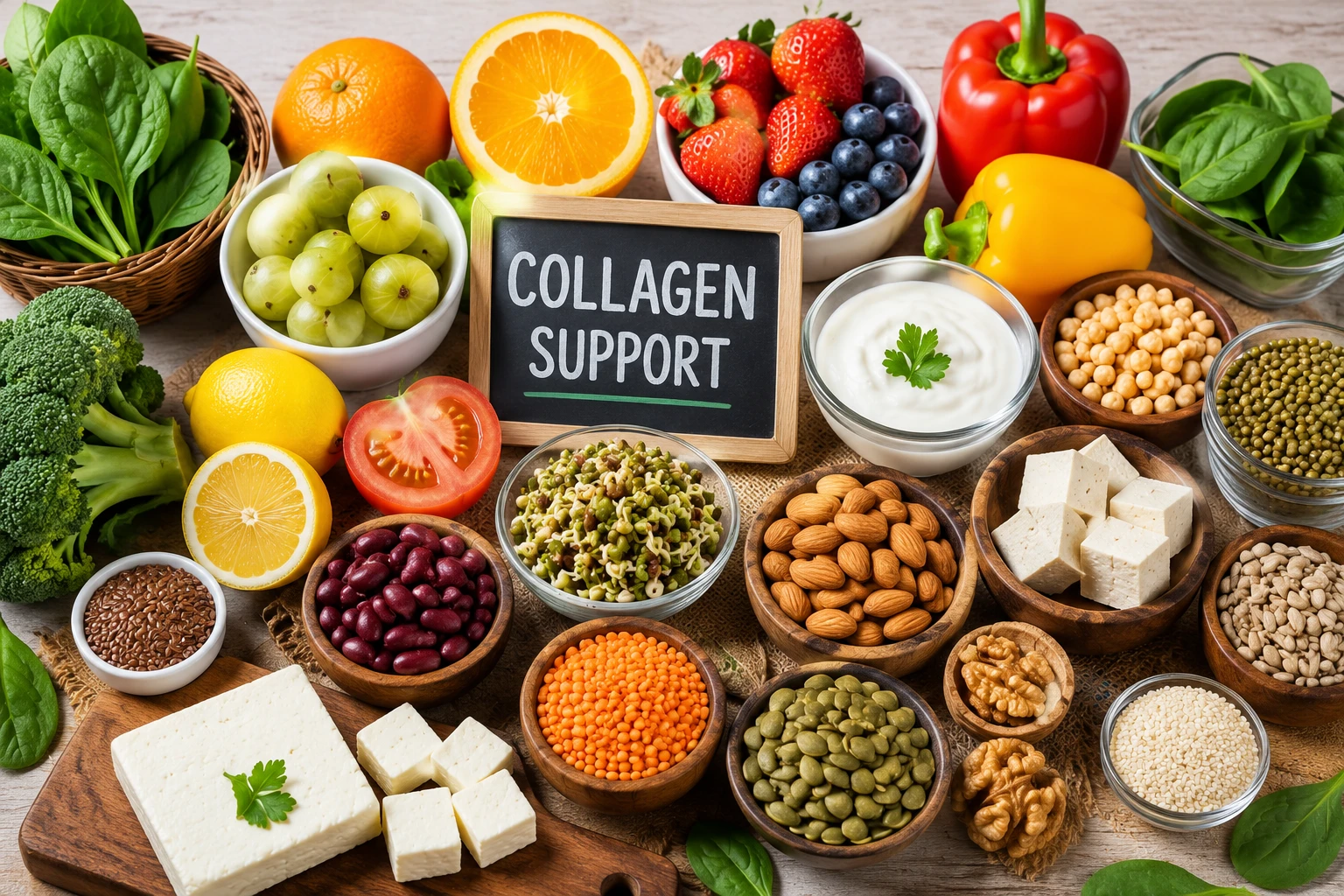
Vegetarian foods that may support collagen and healthy aging include amla, guava, citrus fruits, bell peppers, tomatoes, leafy greens, dal and legumes, soy foods, nuts, seeds, curd, paneer, and milk. These foods provide nutrients that help support skin health, tissue repair, natural glow, hair wellness, and graceful aging when included as part of a balanced diet.
Expert Summary
Collagen production naturally changes with age, lifestyle, stress, sleep, nutrition, and overall health. A vegetarian diet can support collagen formation when it includes vitamin C-rich fruits, protein-rich foods, mineral-rich nuts and seeds, antioxidant-rich vegetables, and good hydration. From a Unani wellness perspective, healthy aging is not only about external beauty. It is connected with digestion, nourishment, sleep, emotional balance, body strength, and daily routine. Food should be selected according to digestion, body nature, age, and health condition.
Key Takeaways
- Vegetarian foods do not usually provide collagen directly.
- They can support the body’s natural collagen formation.
- Vitamin C-rich foods are important for collagen support.
- Protein-rich vegetarian foods help provide building blocks for tissue repair.
- Nuts and seeds may support skin, hair, and healthy aging through minerals and healthy fats.
- Healthy aging needs diet, sleep, hydration, digestion, and stress balance.
- Clinical research and traditional guidelines documented by CCRUM emphasize whole-food nutrition to support metabolic vitality and natural tissue repair.
Understanding Collagen and Healthy Aging
Collagen is one of the main proteins that gives structure and strength to the body. It is often discussed for skin, but it is also important for joints, bones, connective tissues, hair, and nails.
Collagen supports:
- skin elasticity
- skin firmness
- joint comfort
- bone strength
- hair and nail support
- tissue repair
- wound healing
- overall body structure
As people grow older, the body’s natural collagen production may gradually reduce. Lifestyle habits can also affect skin and tissue health.
Common factors that may affect collagen and healthy aging include:
- poor diet
- low protein intake
- lack of vitamin C
- stress
- poor sleep
- smoking
- excess sugar
- dehydration
- excessive sun exposure
- lack of physical activity
- poor digestion
This is why collagen support should not be seen only as a beauty topic. It is a complete wellness topic.
Free Doctor Consultation
Are you concerned about dull skin, hair weakness, early aging signs, tiredness, poor digestion, or low energy?
Pakiza Unani offers free doctor consultation to help users understand their body type, digestion, lifestyle, and wellness needs before starting any supplement, diet routine, or Unani product.
Can Vegetarian Foods Boost Collagen?
Choosing the right vegetarian foods that support collagen ensures your body receives plant-based antioxidants and clean amino acids for skin renewal.
The body needs several nutrients to support collagen formation, including:
- vitamin C
- amino acids from protein
- zinc
- copper
- antioxidants
- healthy fats
- proper hydration
This means a vegetarian diet can be useful when it is balanced and varied.
A diet that includes only tea, biscuits, refined flour, fried snacks, and low-protein meals may not support healthy aging well. But a diet with fruits, vegetables, pulses, legumes, nuts, seeds, dairy, and whole foods can support the body much better.
10 Vegetarian Foods That Support Collagen and Healthy Aging
Below are ten vegetarian foods that may support natural collagen formation, skin health, and graceful aging.
1. Amla
Amla stands out among all vegetarian foods that support collagen due to its exceptionally high and heat-stable vitamin C content.
Why It Helps
Vitamin C plays an important role in collagen formation. Amla may also support immunity, digestion, skin health, and hair wellness.
How to Eat
You can include amla as:
- fresh amla pieces
- amla juice
- amla chutney
- amla powder under guidance
- amla murabba in moderation
Best Time to Eat
Morning or daytime is usually suitable for many people. If you have acidity or sensitive digestion, avoid taking it on an empty stomach without guidance.
Wellness Tip
Amla is powerful in taste and effect. Start with a small quantity and see how your digestion responds.
2. Guava
Fresh guava is another accessible option in the list of vegetarian foods that support collagen that also aids digestive gut health.
Why It Helps
Guava may support collagen-related nutrition because of its vitamin C content. Its fiber may also support digestion and gut health.
How to Eat
You can take guava as:
- sliced fruit
- guava salad
- guava with black salt
- guava smoothie without excess sugar
Best Time to Eat
Mid-morning or evening snack time is suitable for many people.
Wellness Tip
Avoid overeating guava at night if it causes gas, heaviness, or digestive discomfort.
3. Citrus Fruits
Regular consumption of citrus fruits provides essential vegetarian foods that support collagen by shielding connective tissues from oxidative stress.
Why They Help
Vitamin C supports natural collagen formation and antioxidant protection. Citrus fruits also add freshness and hydration to the diet.
How to Eat
You can include citrus fruits as:
- fresh orange
- sweet lime
- lemon water
- lemon added to sprouts
- lemon added to dal or salad
- citrus fruit bowl
Best Time to Eat
Daytime is usually better. People with acidity should avoid very sour fruits on an empty stomach.
Wellness Tip
Adding lemon to sprouts, dal, or salad is a simple way to improve taste and nutrition.
4. Bell Peppers
Adding brightly colored bell peppers gives you powerful vegetarian foods that support collagen to combat everyday UV damage.
Why They Help
Bell peppers may support skin wellness and natural collagen support through vitamin C and plant antioxidants.
How to Eat
You can include bell peppers in:
- salad
- stir-fry
- vegetable soup
- paneer sabzi
- sandwiches
- vegetable pulao
- tofu stir-fry
Best Time to Eat
Lunch or dinner is suitable. If raw bell pepper causes gas, cook it lightly.
Wellness Tip
Avoid overcooking bell peppers because some nutrients may reduce with excessive heat.
5. Tomatoes
Tomatoes are commonly used in Indian cooking and provide antioxidants, including lycopene.
Why They Help
Tomatoes may support skin wellness through antioxidants and hydration. They also add taste and nutrition to daily meals.
How to Eat
You can include tomatoes in:
- dal
- sabzi
- soup
- chutney
- rasam
- salad
- vegetable curry
Best Time to Eat
Lunch or dinner is suitable.
Wellness Tip
If you have acidity, avoid excessive tomato intake and observe whether it triggers discomfort.
6. Leafy Green Vegetables
Leafy greens such as spinach, methi, amaranth, moringa leaves, coriander, and curry leaves are important in vegetarian diets.
Why They Help
Leafy greens provide minerals, antioxidants, fiber, and plant nutrients. These may support digestion, skin wellness, energy, and overall nourishment.
How to Eat
You can include leafy greens as:
- palak sabzi
- methi paratha
- moringa dal
- green chutney
- leafy vegetable soup
- saag
- dal with greens
Best Time to Eat
Lunch is often a good time because leafy vegetables may digest better during the day.
Wellness Tip
Wash leafy vegetables properly. People with kidney stones or specific dietary restrictions should follow medical advice.
7. Dal, Beans, and Legumes
Dal, chana, rajma, lobia, moong, masoor, and sprouts are important vegetarian protein foods.
Why They Help
Collagen formation needs amino acids from protein. Vegetarian protein foods can help provide these building blocks.
How to Eat
You can include legumes as:
- dal
- khichdi
- chana curry
- rajma rice
- sprouts salad
- moong chilla
- dal soup
- besan chilla
Best Time to Eat
Lunch is suitable for heavier legumes like rajma and chana. Light dal or moong khichdi may be suitable for dinner.
Wellness Tip
Soaking, sprouting, and proper cooking can improve digestion and reduce heaviness.
8. Soy Foods and Tofu
Soy foods such as tofu, soy chunks, soybeans, and soy milk may help vegetarians increase protein intake.
Why They Help
Protein provides amino acids that support tissue repair and collagen formation. Soy foods can be useful for vegetarians when suitable for digestion and health condition.
How to Eat
You can include soy as:
- tofu bhurji
- tofu curry
- soy chunks sabzi
- soybean salad
- tofu stir-fry
- soy milk if suitable
Best Time to Eat
Lunch or dinner is suitable.
Wellness Tip
Soy may not suit everyone. People with thyroid concerns, hormone-related concerns, or digestive sensitivity should take guidance before regular high intake.
9. Nuts and Seeds
Almonds, walnuts, sesame seeds, pumpkin seeds, sunflower seeds, flaxseeds, and chia seeds can be useful in a balanced diet.
Why They Help
Nuts and seeds provide healthy fats, vitamin E, zinc, copper, and other minerals that may support skin, hair, and healthy aging.
How to Eat
You can include them as:
- soaked almonds
- sesame chutney
- pumpkin seeds as topping
- flaxseed powder in small quantity
- nuts in breakfast
- seeds added to curd
- dry fruit mix in moderation
Best Time to Eat
Morning or snack time is suitable for many people.
Wellness Tip
Nuts and seeds are nutritious but calorie-dense. Use them in moderation, especially if you have weight, digestion, or cholesterol concerns.
10. Curd, Paneer, and Milk
Dairy foods such as curd, paneer, and milk are common vegetarian protein sources in Indian homes.
Why They Help
Dairy foods provide protein and other nutrients that may support strength, repair, and general wellness. Curd may also support digestion in people who tolerate it well.
How to Eat
You can include dairy as:
- curd with lunch
- paneer sabzi
- paneer bhurji
- raita
- buttermilk
- curd with chilla
- milk with suitable herbs under guidance
Best Time to Eat
Curd is usually better during daytime. Paneer can be taken at lunch or dinner depending on digestion.
Wellness Tip
People with lactose intolerance, sinus tendency, weak digestion, or dairy sensitivity should use dairy carefully.
Foods and Habits That May Affect Skin Aging
Eating collagen-supportive foods is helpful, but reducing damaging habits is also important.
Try to limit:
- excess sugar
- frequent fried foods
- smoking
- alcohol
- highly processed snacks
- poor sleep
- dehydration
- extreme dieting
- excessive sun exposure without protection
- frequent stress eating
Healthy skin and graceful aging need nourishment as well as protection.
Signs Your Body May Need Better Nourishment
Your body may need better diet and lifestyle support if you experience:
- dull skin
- low energy
- hair weakness
- brittle nails
- poor recovery
- frequent tiredness
- poor digestion
- early aging signs
- low stamina
- frequent cravings
These signs can happen due to many causes. If they continue, professional guidance is better than self-treatment.
How Unani Medicine Views Skin, Aging, and Nourishment
In Unani medicine, skin glow and youthful strength are not seen as surface-level matters only. They may be connected with digestion, nourishment, sleep, stress, body strength, and overall balance.
The Unani approach may focus on:
- improving digestion
- supporting nourishment
- maintaining body balance
- improving sleep routine
- reducing stress
- supporting natural vitality
- choosing foods according to body nature
- encouraging graceful aging
This approach supports inner wellness rather than only external appearance.
Why Root-Cause Wellness Matters
Many people look for quick anti-aging products, beauty supplements, or instant glow solutions. But skin, hair, and aging are influenced by many internal and external factors.
A root-cause approach asks:
- Is digestion strong?
- Is sleep proper?
- Is the diet balanced?
- Is there enough protein?
- Is vitamin C intake sufficient?
- Is stress too high?
- Is there dehydration?
- Is there any medical condition?
- Is the person using harsh products?
- Is lifestyle affecting skin health?
This wider approach is more useful than depending only on one food or one supplement.
Important Note
Vegetarian foods can support collagen formation and healthy aging, but they should not be seen as guaranteed anti-aging treatments. People with diabetes, kidney disease, liver disease, thyroid problems, digestive issues, pregnancy, breastfeeding, or ongoing medicines should consult a qualified doctor before making major diet changes or taking supplements.
Talk to a Unani Doctor
If you are concerned about dull skin, early aging signs, weakness, hair problems, or poor digestion, proper guidance can help.
Pakiza Unani’s free consultation can help you understand:
- which foods suit your body type
- whether your digestion needs support
- whether you need lifestyle correction
- whether product support is suitable
- when medical evaluation may be required
- how to follow a safer wellness routine
Lifestyle Tips to Support Collagen and Healthy Aging
Food is important, but lifestyle also plays a major role in skin and aging.
Helpful habits include:
- sleep on time
- drink enough water
- eat balanced meals
- reduce excess sugar
- avoid smoking
- manage stress
- include light exercise
- avoid crash dieting
- protect skin from harsh sun exposure
- avoid frequent junk food
- maintain good digestion
- consult a doctor for long-term weakness or skin concerns
Consistency matters more than short-term beauty trends.
Diet Support for Better Skin and Vitality
A balanced vegetarian diet for skin and healthy aging may include:
- vitamin C-rich fruits
- protein-rich dals and legumes
- curd or paneer if suitable
- leafy green vegetables
- nuts and seeds
- colorful vegetables
- whole grains
- enough water
- seasonal foods
- home-cooked meals
Avoid depending on one “superfood.” A variety of foods works better for long-term health.
Unani vs Modern View
Modern nutrition explains collagen support through nutrients such as vitamin C, protein, zinc, copper, antioxidants, and healthy fats.
Unani wellness looks at the person more personally. It considers digestion, temperament, sleep, stress, food suitability, body strength, and lifestyle.
Both views are useful.
Modern nutrition helps us understand what nutrients support collagen. Unani guidance helps us understand which foods may suit the person’s body nature and digestion.
Comparison Table
| Factor | Modern Nutrition View | Unani Wellness View |
|---|---|---|
| Main Focus | Nutrients that support collagen formation | Balance, digestion, nourishment, and body nature |
| Key Nutrients | Vitamin C, protein, zinc, copper, antioxidants | Suitable food, digestion, routine, and vitality |
| Best Approach | Eat collagen-supportive foods regularly | Choose foods according to body nature and digestion |
| Caution | Avoid supplement misuse | Avoid unsuitable foods without guidance |
| Goal | Support skin and tissue health | Support graceful aging and overall wellness |
Recommended Support Options
This article is mainly food-focused, so product recommendations should be kept general and based on consultation.
Pakiza Unani may suggest suitable wellness support only after understanding the person’s symptoms, digestion, body nature, and health condition.
Possible support areas may include:
Skin and Hair Wellness
If the person has dull skin, hair weakness, or early aging concerns, suitable support may be suggested after consultation.
Digestive Wellness
If digestion is weak, nutrients may not be properly used by the body. Digestive support may be considered under doctor guidance.
General Weakness
If tiredness, low energy, or poor nourishment is present, the doctor may suggest a suitable wellness plan based on symptoms.
Note: Food should remain the foundation. Products or supplements should be used only when suitable and recommended.
When to Seek Professional Advice
Consult a qualified doctor if you have:
- sudden skin changes
- severe hair fall
- persistent weakness
- unexplained weight loss
- poor digestion
- brittle nails with fatigue
- early aging concerns with low energy
- diabetes
- kidney disease
- liver disease
- thyroid concerns
- pregnancy or breastfeeding
- ongoing medicines
- confusion about supplements
Professional advice helps avoid wrong diet choices and unnecessary self-treatment.
Why Consultation Is Important Before Taking Beauty or Collagen Supplements
Many people start collagen powders, beauty supplements, or herbal products after seeing online advertisements. But supplements are not suitable for everyone.
Consultation helps understand:
- whether you really need a supplement
- whether food and lifestyle can be improved first
- whether digestion can tolerate it
- whether you have medical restrictions
- whether any product may interact with medicines
- what routine may be suitable
- when medical testing may be needed
This makes the approach safer and more personalized.
Related Articles
- What Is Unani Medicine? A Beginner’s Guide
- What Is Mizaj in Unani Medicine?
- 5 Calcium-Rich Moringa Leaf Recipes: How to Make Them and When to Eat
- 4 Easy Ways to Eat More Protein Without Supplements
- Grey Hair and Self-Acceptance: A Natural Aging & Unani Wellness Perspective
- Daily Unani Routine for Better Health and Energy
Frequently Asked Questions
Do vegetarian foods contain collagen?
Most vegetarian foods do not contain collagen directly. However, they can support the body’s natural collagen formation by providing vitamin C, protein, minerals, antioxidants, and healthy fats.
Which vegetarian food is best for collagen support?
Amla, guava, citrus fruits, bell peppers, leafy greens, dal, soy, nuts, seeds, curd, and paneer can support collagen-related nutrition as part of a balanced diet.
Is vitamin C important for collagen?
Yes. Vitamin C plays an important role in the body’s natural collagen formation and also supports antioxidant protection.
Can food make skin look younger?
Healthy food can support skin health, but it should not be seen as a guaranteed anti-aging solution. Sleep, hydration, stress control, digestion, and lifestyle also matter.
Are collagen supplements necessary?
Collagen supplements are not necessary for everyone. Many people can support skin and tissue health through balanced food and lifestyle. Supplements should be taken only when suitable and under guidance.
Can vegetarians support collagen without supplements?
Yes. Vegetarians can support collagen formation by eating enough protein, vitamin C-rich foods, nuts, seeds, legumes, dairy, and colorful vegetables.
What habits may affect skin and aging?
Smoking, excess sugar, poor sleep, dehydration, stress, harsh sun exposure, and poor nutrition may affect skin health and aging.
Should I consult a doctor before taking collagen or beauty supplements?
Yes, especially if you have medical conditions, pregnancy, breastfeeding, digestive issues, or are taking regular medicines.
References & Review Sources
This article is prepared using general wellness knowledge and reviewed for educational accuracy. Reference sources may include general nutrition guidance, public health resources on collagen-supportive nutrients, and traditional Unani wellness understanding.
Diet changes, supplement use, and product usage should always be based on personalized consultation and proper medical guidance.
Medical Review
This article has been reviewed by Pakiza Unani’s in-house Unani doctor for educational accuracy and safe wellness guidance. The content is intended for general health awareness and should not replace personalized medical consultation.
Disclaimer
This article is for educational purposes only. It is not a substitute for medical diagnosis, treatment, or professional healthcare advice. Always consult a qualified healthcare professional before starting any treatment, supplement, diet change, or wellness product.