What Happens When You Chew Cardamom Daily After Meals?
Written by: Pakiza Unani Editorial Team
Reviewed by: Pakiza Unani’s In-house Unani Doctor
Last Updated: July 3, 2026
Definition
Cardamom, commonly known as elaichi, is an aromatic spice widely used in Indian kitchens for taste, fragrance, mouth freshness, and traditional digestive comfort. Chewing cardamom after meals is a common practice that may help freshen breath, support saliva flow, reduce food aftertaste, and provide a light feeling after eating when used in moderation.
Quick Answer
Chewing one small cardamom pod after meals may help freshen breath, improve mouth feel, support saliva production, and provide mild digestive comfort for some people. It may also help reduce post-meal heaviness and sweet cravings in some cases. However, cardamom should not be treated as a cure for acidity, gas, diabetes, weight loss, or chronic digestive problems.
Expert Summary
Cardamom is a traditional kitchen spice with a pleasant aroma and long use in Indian food culture. Chewing cardamom after meals may be useful as a simple post-meal habit for mouth freshness and mild digestive comfort. From a Unani wellness perspective, spices should be used according to body nature, digestion, season, symptoms, and overall health condition. Cardamom can be helpful in small food amounts, but people with chronic acidity, gallbladder concerns, pregnancy, diabetes, kidney disease, liver disease, digestive disorders, or ongoing medicines should seek proper guidance before using it regularly in higher amounts.
Key Takeaways
- Cardamom is commonly used as a natural mouth freshener after meals.
- Chewing cardamom may support saliva production and reduce bad breath.
- It may help some people feel lighter after heavy or spicy meals.
- One small green cardamom pod after food is usually enough for many people.
- Cardamom is not a replacement for medical treatment.
- Frequent acidity, bad breath, bloating, or stomach discomfort should be evaluated by a qualified doctor.
Understanding Cardamom
Cardamom is one of the most popular spices in Indian homes. It is used in tea, sweets, biryani, kheer, herbal drinks, mouth fresheners, and traditional recipes.
Green cardamom has a sweet, warm, refreshing aroma. Because of this, many people chew it after meals to reduce food odor and freshen the mouth.
In daily life, people use cardamom after meals for:
- mouth freshness
- pleasant breath
- food aftertaste
- post-meal heaviness
- mild bloating
- saliva stimulation
- digestive comfort
- reducing the urge for sugary mouth fresheners
However, cardamom should be understood as a supportive food spice, not as a medicine for every digestive complaint.
Free Doctor Consultation
Are you facing acidity, gas, bloating, bad breath, weak digestion, or heaviness after meals?
Pakiza Unani offers free doctor consultation to help users understand their digestion, body type, symptoms, and lifestyle before starting any home remedy, Unani product, or wellness routine.
What Happens When You Chew Cardamom After Meals?
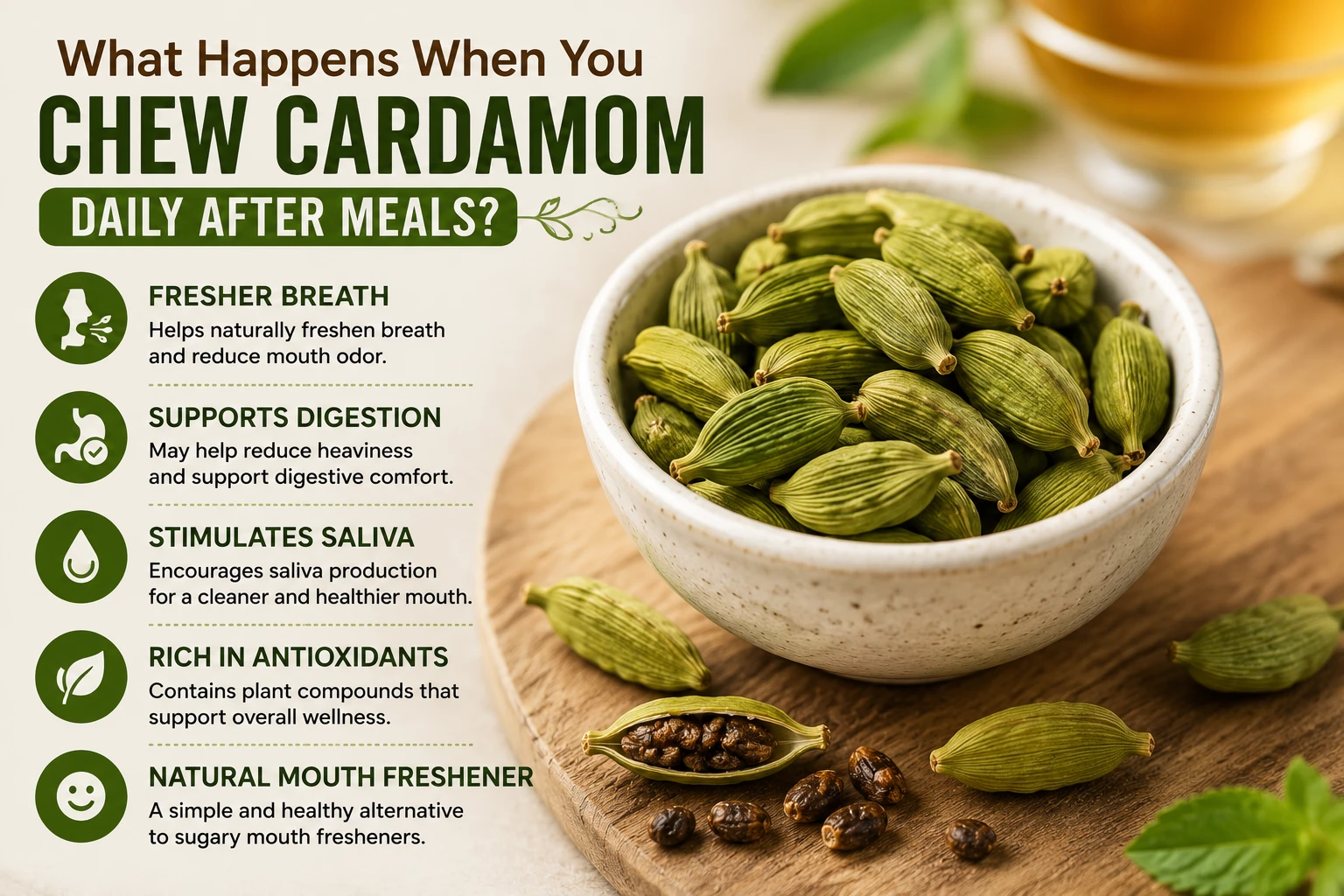
When you chew cardamom after meals, the seeds release aromatic oils that create a fresh and pleasant taste in the mouth. The chewing action may also help stimulate saliva, which supports mouth comfort and the first stage of digestion.
Some people may feel that cardamom helps them after heavy, oily, spicy, or strong-smelling meals. Others mainly use it for breath freshness.
Possible effects may include:
- fresher breath
- cleaner mouth feel
- reduced food odor
- mild digestive comfort
- reduced post-meal heaviness
- refreshing taste after food
- lower need for sugary mouth fresheners
These effects can vary from person to person.
1. May Help Freshen Breath Naturally
One of the most common reasons people chew cardamom is to improve mouth freshness.
After eating foods with onion, garlic, spices, tea, coffee, or oily ingredients, the mouth may smell unpleasant. Cardamom’s strong natural aroma may help reduce this aftertaste.
Why It May Help
Cardamom seeds release a pleasant fragrance when chewed. This can help create a cleaner and fresher mouth feel after food.
It may be useful after eating:
- onion
- garlic
- spicy food
- oily food
- non-vegetarian meals
- strong tea or coffee
- rich festive meals
Practical Tip
Chew one small green cardamom pod slowly after meals. If the outer shell feels hard, chew the seeds and discard the shell.
2. May Support Saliva Production
Saliva is important for oral comfort and digestion. It helps moisten the mouth, soften food, clear small food particles, and support the beginning of digestion.
Chewing cardamom may encourage saliva flow because of its taste, aroma, and chewing action.
Why Saliva Matters
Healthy saliva flow may help:
- reduce dry mouth
- improve mouth freshness
- support chewing and swallowing
- clear food particles
- support oral comfort
- begin the digestive process
This is one reason cardamom is commonly used as a post-meal mouth freshener.
Practical Tip
If your mouth feels dry after meals, chewing cardamom occasionally may help with mouth freshness. If dry mouth happens often, consult a doctor or dentist because it may be linked with medicines, dehydration, oral health issues, or other health conditions.
3. May Support Digestive Comfort
Cardamom is traditionally used after meals because many people feel it helps digestion.
It may be especially useful after meals that feel heavy, oily, rich, or spicy. Some people may feel lighter after chewing cardamom.
Why It May Help
Cardamom may support digestive comfort by:
- refreshing the mouth after food
- stimulating saliva
- reducing unpleasant aftertaste
- supporting a light feeling after meals
- helping replace sugary mouth fresheners
However, cardamom should not be seen as a treatment for chronic acidity, GERD, ulcers, IBS, liver disease, gallbladder issues, or long-term stomach problems.
Practical Tip
If you regularly feel heavy after meals, do not depend only on cardamom. Check your meal size, eating speed, fried food intake, dinner timing, stress level, and digestion.
4. May Reduce Post-Meal Sweet Cravings
Many people feel like eating something sweet after lunch or dinner. This may happen because of habit, emotional eating, an unbalanced meal, or taste craving.
Cardamom has a naturally sweet aroma, which may help some people feel satisfied after meals without immediately reaching for sweets.
How It May Help
Cardamom may help:
- refresh the mouth
- give a sweet aromatic taste
- reduce the need for sugary mouth fresheners
- replace sweet paan or sweet saunf mixes
- reduce dessert craving in some people
Better Than Sugary Mouth Fresheners
Many mouth fresheners available in the market contain sugar, artificial colors, or sweet coatings. Plain cardamom is a simpler option when used in moderation.
Practical Tip
If you crave sweets daily after meals, try chewing one cardamom pod. Also improve protein, fiber, and meal balance, because cravings may come from poor meal quality.
5. May Give a Light Feeling After Heavy Meals
In Indian food culture, spices are often used not only for taste but also for balance. Cardamom is one such spice that may give a refreshing feeling after heavy meals.
It may be useful after:
- oily meals
- spicy meals
- rich gravies
- biryani or pulao
- sweets
- dairy-based desserts
- festive meals
Practical Tip
Use cardamom as a small after-meal habit. Do not use it as an excuse to eat very heavy meals regularly. The main focus should still be portion control and balanced food.
How to Chew Cardamom After Meals
Here is a simple way to use cardamom:
- Take one small green cardamom pod.
- Lightly crush it or chew it slowly.
- Let the seeds release their aroma.
- Chew for a few minutes after meals.
- Swallow the seeds if comfortable.
- Discard the outer shell if it feels hard.
How Much Is Enough?
For many healthy adults, one small cardamom pod after a meal is enough.
Avoid chewing too many pods daily. More is not always better.
Best Time to Chew Cardamom
The best time is usually after meals.
You may chew cardamom:
- after lunch
- after dinner
- after a heavy meal
- after food with onion or garlic
- after tea or coffee if mouth odor is present
- after festive meals in small quantity
Avoid excessive use late at night if it causes discomfort or if you have sensitive digestion.
Green Cardamom vs Black Cardamom
Green cardamom and black cardamom are both used in Indian cooking, but they are not the same.
Green Cardamom
Green cardamom has a sweet, fresh, and pleasant aroma. It is commonly used in tea, sweets, desserts, and mouth fresheners. It is usually preferred for chewing after meals.
Black Cardamom
Black cardamom has a stronger, smoky flavor. It is more commonly used in biryani, curries, and rich dishes. It is usually not chewed as a mouth freshener.
Best Choice After Meals
For chewing after meals, green cardamom is usually the better choice.
Common Mistakes to Avoid
Cardamom is simple, but people may still use it incorrectly.
Avoid these mistakes:
- chewing too many pods daily
- using it as a cure for acidity
- using it instead of dental care
- taking cardamom supplements without guidance
- ignoring chronic bloating or bad breath
- giving concentrated cardamom remedies to children without advice
- using sugary cardamom mouth fresheners daily
- assuming natural means suitable for everyone
Moderation and guidance are important.
Signs You May Need Personalized Guidance
Chewing cardamom may help with mild mouth freshness, but you should seek guidance if you have:
- frequent acidity
- gas or bloating after every meal
- bad breath that does not improve
- mouth ulcers
- dry mouth
- poor appetite
- burning sensation in the chest
- nausea after food
- heaviness even after small meals
- constipation
- stomach pain
- vomiting
- unexplained weight loss
These symptoms may need proper evaluation instead of only home remedies.
How Unani Medicine Views Cardamom and Digestion
In Unani wellness, spices are not used randomly. Their suitability depends on digestion, temperament, season, symptoms, age, and overall health.
Cardamom is traditionally valued for its pleasant aroma and post-meal freshness. It may be used in small amounts to support taste, freshness, and digestive comfort.
The Unani approach may consider:
- digestive strength
- food habits
- body nature
- appetite
- heaviness after meals
- acidity tendency
- sleep routine
- stress
- bowel habits
- overall vitality
A spice that suits one person may not suit another in the same way. This is why personalized guidance is important.
Why Root-Cause Wellness Matters
Many people chew cardamom for bad breath, acidity, heaviness, or gas. But these symptoms may have deeper causes.
A root-cause approach asks:
- Are meals too heavy?
- Is food eaten too late?
- Is digestion weak?
- Is there constipation?
- Is water intake low?
- Is stress affecting digestion?
- Is oral hygiene proper?
- Is there gum disease?
- Is acidity frequent?
- Is sugar intake high?
- Is there an underlying medical condition?
Cardamom may provide temporary freshness, but root-cause correction is needed for long-term relief.
Important Note
Cardamom is safe for many people when used as a normal food spice, but it should still be used in moderation. People with chronic acidity, gallbladder problems, kidney disease, liver disease, diabetes, pregnancy, breastfeeding, digestive disorders, or ongoing medicines should consult a qualified doctor before using cardamom regularly in higher amounts or supplement form.
Talk to a Unani Doctor
If you frequently feel heaviness, gas, acidity, bad breath, poor appetite, or digestive discomfort after meals, proper guidance can help.
Pakiza Unani’s free consultation can help you understand:
- whether cardamom suits your body type
- whether your digestion needs support
- whether food timing is affecting symptoms
- whether product support is suitable
- whether medical evaluation may be needed
- how to follow a safer wellness routine
Lifestyle Tips for Better Digestion After Meals
Cardamom may help as a small habit, but digestion depends on your full routine.
Helpful habits include:
- eat slowly
- chew food properly
- avoid overeating
- avoid lying down immediately after meals
- take a short gentle walk after food
- reduce fried and heavy foods
- avoid very late dinners
- drink water through the day
- manage stress
- maintain regular meal timing
- avoid excess tea and coffee
- consult a doctor for persistent symptoms
Small routine changes can improve digestion more than depending only on spices.
Diet Support for Better Digestion
A digestion-friendly diet may include:
- warm home-cooked meals
- dal and khichdi when digestion is weak
- curd or buttermilk if suitable
- vegetables cooked with mild spices
- fruits in suitable quantity
- fennel, cumin, or cardamom in moderation
- enough water
- light dinner
- balanced breakfast
- protein-rich foods according to digestion
Avoid eating heavy, oily, spicy, and sweet foods daily if they cause discomfort.
Cardamom vs Sugary Mouth Fresheners
Many people use sweet mouth fresheners after meals. These may taste good but often contain sugar, artificial colors, and sweet coatings.
Plain cardamom is usually a cleaner option when compared with sugary mouth fresheners.
| Factor | Plain Cardamom | Sugary Mouth Freshener |
|---|---|---|
| Main Purpose | Mouth freshness and aroma | Taste and sweetness |
| Sugar Content | Usually no added sugar | Often contains sugar |
| Use After Meals | Small amount may be enough | Easy to overeat |
| Digestion Support | Traditionally used for digestive comfort | Depends on ingredients |
| Best Approach | Use moderately | Use occasionally |
Unani vs Modern View
Modern wellness and oral health perspectives may look at cardamom as an aromatic spice that can support mouth freshness, saliva flow, and food enjoyment.
Unani wellness looks at cardamom more personally. It considers whether the spice suits the person’s digestion, temperament, season, and symptoms.
Both views can be useful.
Modern understanding helps explain possible oral and digestive effects. Unani guidance helps personalize use according to body nature and health condition.
Comparison Table
| Factor | Modern Wellness View | Unani Wellness View |
|---|---|---|
| Main Focus | Mouth freshness, saliva, digestion support | Suitability, digestion, temperament, and balance |
| Best Use | Small post-meal spice | Used according to body nature and digestion |
| Common Benefit | Fresh breath and better mouth feel | Digestive comfort and aromatic support |
| Caution | Avoid excessive supplement use | Avoid unsuitable use without guidance |
| Ideal Approach | Moderate use after meals | Personalized guidance when symptoms persist |
Recommended Support Options
This article is mainly about a simple food habit, so product recommendations should be general and based on consultation.
Pakiza Unani may suggest suitable wellness support only after understanding the person’s symptoms, digestion, body nature, and health condition.
Possible support areas may include:
Digestive Wellness
If poor digestion, acidity, gas, bloating, or heaviness is frequent, suitable digestive support may be recommended after consultation.
Oral Freshness and Gut Health
If bad breath continues despite cardamom use, the cause may be oral hygiene, digestion, acidity, dry mouth, or another condition. Proper evaluation is important.
General Wellness
If low energy, poor appetite, or weakness is present, the doctor may suggest a suitable wellness plan based on body type and symptoms.
Note: Products or remedies should be used only when suitable and recommended after consultation.
When to Seek Professional Advice
Consult a qualified doctor if you have:
- frequent acidity
- chronic gas or bloating
- bad breath that does not improve
- mouth ulcers
- gum problems
- dry mouth
- poor appetite
- stomach pain
- vomiting
- unexplained weight loss
- diabetes
- kidney disease
- liver disease
- pregnancy or breastfeeding
- ongoing medicines
- confusion about herbal remedies
Professional advice helps avoid wrong self-treatment and identifies the real cause.
Why Consultation Is Important Before Using Herbal Remedies
Many people use spices and herbs daily without understanding whether they suit their body.
Consultation helps understand:
- your digestion
- your body nature
- your symptoms
- your food habits
- existing medicines
- possible precautions
- suitable quantity
- whether product support is needed
- when medical testing may be required
This makes the approach safer and more personalized.
Related Articles
- What Is Unani Medicine? A Beginner’s Guide
- What Is Mizaj in Unani Medicine?
- 5 Calcium-Rich Moringa Leaf Recipes: How to Make Them and When to Eat
- 4 Easy Ways to Eat More Protein Without Supplements
- 5 Foods That May Make You Age Faster: What to Limit and What to Eat Instead
- Daily Unani Routine for Better Health and Energy
Frequently Asked Questions
Is chewing cardamom after meals good?
Chewing one small cardamom pod after meals may help freshen breath, stimulate saliva, and support digestive comfort for some people.
Can cardamom reduce bad breath?
Cardamom has a pleasant aroma and may help reduce food odor after meals. If bad breath is frequent, oral hygiene and digestion should also be checked.
Can cardamom help digestion?
Cardamom is traditionally used for digestive comfort. It may help some people feel lighter after meals, but it should not replace treatment for chronic digestive problems.
How many cardamom pods can I chew daily?
For many healthy adults, one small pod after meals may be enough. Avoid excessive use, especially if you have a medical condition.
Can I chew cardamom every day?
Many people use cardamom regularly as a food spice. Daily chewing in small amounts may suit some people, but it may not suit everyone.
Is cardamom good for acidity?
Some people may feel better after chewing cardamom, but frequent acidity needs proper evaluation. Do not depend only on cardamom for chronic acidity.
Can children chew cardamom?
Small food amounts may be used in family meals, but children should not be given concentrated remedies or supplements without guidance.
Who should avoid excess cardamom?
People with chronic health conditions, pregnancy, breastfeeding, gallbladder issues, digestive disorders, or ongoing medicines should consult a doctor before using cardamom in high amounts.
References & Review Sources
This article is prepared using general wellness knowledge and reviewed for educational accuracy. Reference sources may include general nutrition guidance, oral health awareness, traditional Unani wellness understanding, and public health resources on safe spice use.
Food habits, herbal remedies, supplements, and product usage should always be based on personalized consultation and proper medical guidance.
Medical Review
This article has been reviewed by Pakiza Unani’s in-house Unani doctor for educational accuracy and safe wellness guidance. The content is intended for general health awareness and should not replace personalized medical consultation.
Disclaimer
This article is for educational purposes only. It is not a substitute for medical diagnosis, treatment, dental care, or professional healthcare advice. Always consult a qualified healthcare professional before starting any treatment, supplement, diet change, herbal remedy, or wellness product.